78.3
thousand CZK per square meter
Average price in the Czech Republic
Commentary by the Czech Bar Association
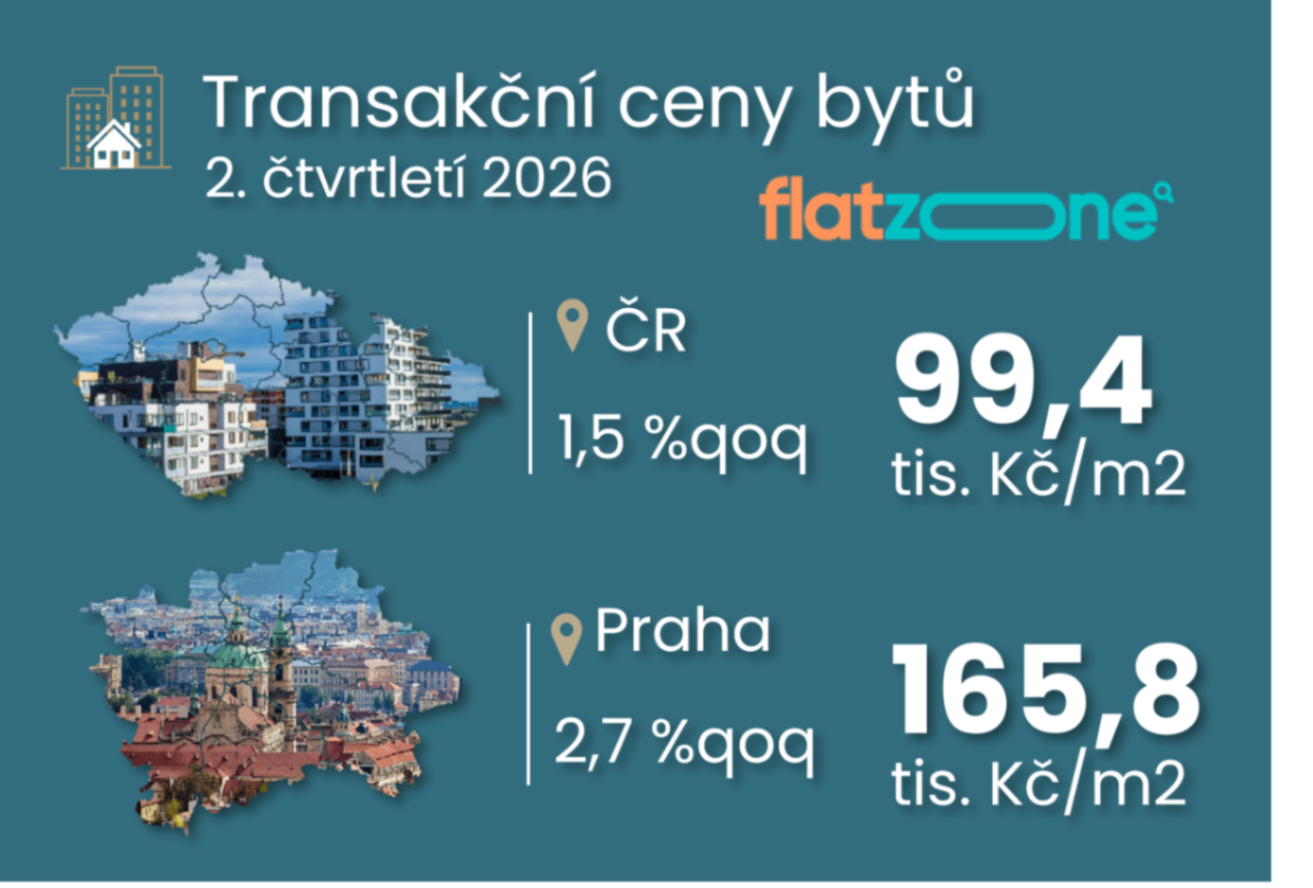
Average transaction prices for apartments in older buildings in the Czech Republic reached 78,000 CZK per square meter in the second quarter of 2026, and 149,000 CZK per square meter in Prague (i.e., 190% of the average transaction price in the Czech Republic). The range between the minimum and maximum of these average prices in other regional capitals was between 51,000 and 118,000 CZK per square meter (i.e., between 65 and 150% of the average transaction price in the Czech Republic), which are the prices transacted in the cities of Ústí nad Labem and Brno.
Prices of Older Apartments by Regional Capital City
Q2 2026
CBA Monitor
You can hide a data set by clicking on the data set name in the chart legend.
Source of Primary Data
Flat ZoneCategory
Real Estate PricesData Frequency
quarterlyNote
Average transaction price for the quarter.The average price for the Czech Republic as a whole may fall outside the range for regional capitals, as it also includes data for cities outside the regions.
According to Flat Zone’s methodology, the “older apartments” category includes apartments built before 1995. Meanwhile, the “new and nearly new apartments” category includes initial sales of new apartments (in the developer-client relationship; at the time of sale according to the price list) and resales of new apartments (so-called “nearly new” apartments in a client-to-client relationship; at the time of registration in the real estate cadastre) built since 1995.
Příbuzné grafy